

Home

Fuel switching is often considered an essential step in achieving a low-carbon future.

Rain water, storm water, grey water, ground water and water reclaimed from manufacturing processes can be treated and reused.

Unfired clay bricks were first used in Mesopotamia around the third millennium BC.
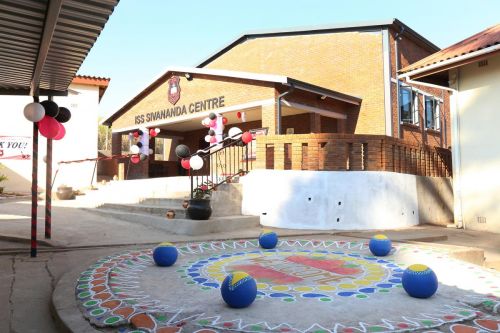
Mandela’s legacy was evident at the KwaZulu-Natal based Isnembe Secondary School on Thursday, 18 July as community members, school and Department of Education representatives, as well as generous...view more
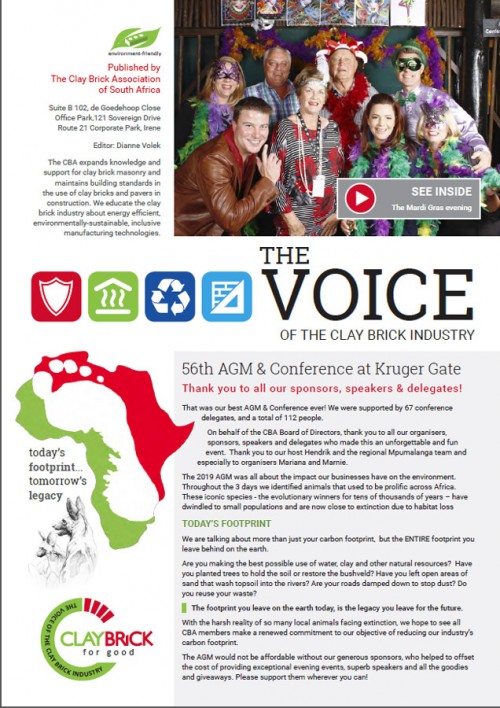
The Voice is a printed magazine for CBA members. The July issue of The Voice has been published. Members - please contact Marnie at the CBA on admin@claybrick.org.za if your printed issue has not...view more

Submitted by: Lisa Reynolds
Carbon Tax is being implemented in South Africa from 1 June 2019. At the CBA’s annual conference, Lisa Reynolds of Green Building Design Group (GreenBDG)...view more

Dr Garth Tayler, a consultant in Ceramic Science and heavy clay production spoke on the 80:20 Rule as applied to sustainable brick manufacture.
Back in 1906 the Italian engineer,...view more

The recent Quarterly Labour Force Survey published by Stats SA indicated a spike in unemployment with some 27.1% of the country’s employable population actively seeking work. This is most notable...view more

By Tim Harford Presenter, 50 Things That Made the Modern Economy
Bricks have been with us since the very dawn of civilisation. The oldest were found in Jericho, in Jordan, by the...view more